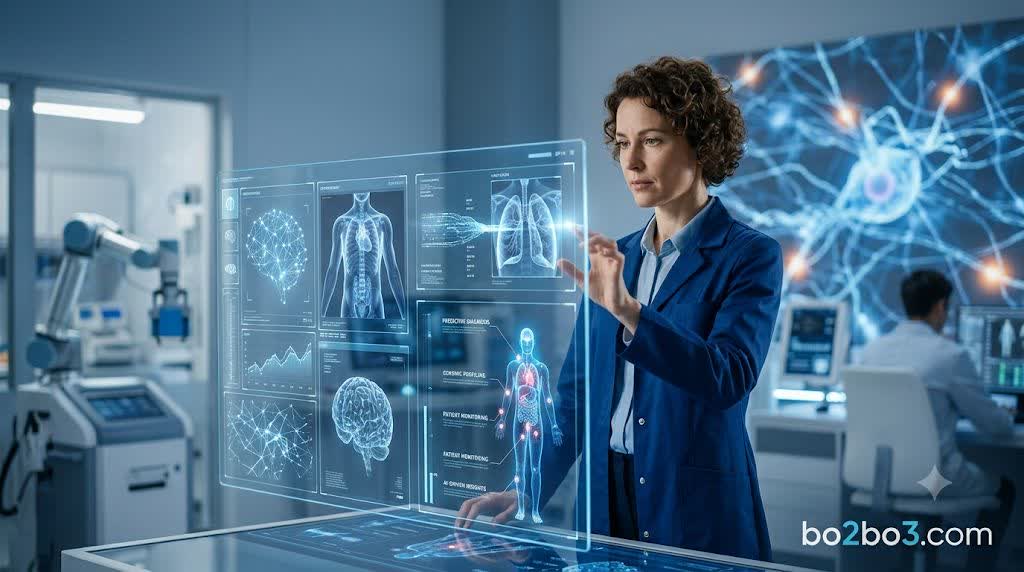
How Artificial Intelligence Is Helping Improve Human Health
Artificial intelligence, better known as AI, is quickly becoming one of the most important technologies in modern healthcare. From helping doctors analyze medical images to supporting medical research and monitoring patients, AI is changing the way healthcare professionals work.
AI is not simply about robots replacing doctors. In reality, some of the most useful applications of AI are designed to help doctors, nurses, researchers, and patients make better use of information and technology.
What Is Artificial Intelligence in Healthcare?
Artificial intelligence in healthcare refers to computer systems that can analyze information, recognize patterns, make predictions, and assist with different healthcare tasks.
Healthcare generates enormous amounts of data, including medical images, laboratory results, electronic health records, and information collected by wearable devices. AI can process large amounts of this information quickly and identify patterns that may be useful to healthcare professionals.
The World Health Organization (WHO) recognizes the potential of AI to improve healthcare while emphasizing safety, ethics, equity, and appropriate governance.
1. Faster Disease Detection
One of the most promising benefits of AI is its ability to assist with disease detection.
AI systems can analyze medical images such as X-rays, CT scans, and MRI scans. They can identify patterns in images and highlight areas that may require additional attention from a healthcare professional.
This does not mean that an AI system should independently diagnose every patient. Instead, AI can work as an additional tool that supports doctors during the diagnostic process.
2. Helping Doctors Make Better Decisions
Doctors often have to deal with huge amounts of information when evaluating a patient. Medical history, laboratory results, symptoms, medications, and previous examinations can all be important.
AI can help organize and analyze this information, potentially making it easier for healthcare professionals to recognize important patterns.
The WHO guidance on AI ethics and governance highlights the importance of keeping human judgment and responsibility at the center of healthcare decisions.
3. Personalized Healthcare
Every person is different, and the same treatment does not always produce the same result for every patient.
AI can analyze large amounts of medical information and help researchers and healthcare professionals understand how different factors may influence treatment outcomes.
In the future, AI could contribute to increasingly personalized healthcare by helping doctors consider a patient’s individual characteristics, medical history, and other relevant information.
4. Monitoring Patients
Another interesting application of AI is continuous patient monitoring.
Smartwatches, fitness trackers, medical sensors, and other wearable devices can collect information such as heart rate, activity levels, sleep patterns, and other measurements.
AI can analyze this information and identify unusual patterns that could potentially require further attention.
5. Helping Discover New Medicines
Developing a new medicine can take many years and requires extensive research. AI can help researchers analyze chemical and biological data and identify promising possibilities more efficiently.
According to the WHO’s AI for Health programme, artificial intelligence has significant potential in pharmaceutical development and healthcare.
6. Supporting Medical Research
Medical researchers work with massive datasets every day. Finding useful relationships within these datasets can be difficult and time-consuming.
AI can process large datasets, recognize patterns, and help researchers explore new possibilities.
7. Improving Access to Healthcare
People living in rural or remote areas may have limited access to medical specialists. AI-powered healthcare technologies could help support remote consultations, medical information analysis, and other digital healthcare services.
AI cannot replace healthcare professionals, but it may help extend the reach of healthcare services when used responsibly.
8. Reducing Administrative Work
Healthcare professionals spend a significant amount of time handling administrative tasks.
AI can assist with activities such as organizing information, summarizing documents, processing records, and supporting healthcare workflows.
Reducing repetitive administrative work could give healthcare professionals more time to focus on their patients.
9. Supporting Mental Health
AI is also being explored as a tool for mental health support.
Some digital systems can provide information, reminders, educational resources, and conversational support.
However, AI should not be considered a replacement for qualified healthcare professionals, especially when someone is experiencing a serious mental health problem or an emergency.
10. Predicting Health Risks
One of the most interesting possibilities of AI is predictive healthcare.
Instead of waiting until a disease becomes serious, AI systems may analyze available health information and identify patterns associated with increased risk.
Earlier identification of potential risks may give healthcare professionals and patients more opportunities to take preventive action.
Will AI Replace Doctors?
This is one of the biggest questions surrounding artificial intelligence in healthcare.
The better way to think about AI is as a tool that supports doctors rather than simply replacing them.
Healthcare involves much more than analyzing data. Doctors and nurses also need communication skills, experience, empathy, ethical judgment, and an understanding of individual patients.
The WHO guidance on Ethics and Governance of Artificial Intelligence for Health emphasizes human autonomy, privacy, accountability, and responsible use of AI.
The Risks of AI in Healthcare
AI also comes with important risks. AI systems can produce incorrect results, particularly when they are trained using incomplete, poor-quality, or biased data.
Privacy is another major concern because healthcare systems deal with highly sensitive personal information.
There are also questions about cybersecurity, transparency, accountability, fairness, and whether patients and doctors can understand how an AI system reached a particular conclusion.
For these reasons, healthcare AI needs careful testing, regulation, monitoring, and human oversight.
AI, Privacy, and Patient Data
Patient information must be handled carefully when artificial intelligence is used in healthcare.
AI systems may require large datasets to operate effectively, but collecting and processing medical information creates important privacy responsibilities.
Healthcare organizations and technology developers need appropriate security measures and clear rules for collecting, storing, processing, and sharing health data.
The Future of Artificial Intelligence in Healthcare
The future of healthcare could look very different as artificial intelligence continues to develop.
AI may help doctors detect diseases earlier, researchers discover medicines faster, hospitals operate more efficiently, and patients monitor certain aspects of their health from home.
Newer AI systems can work with different types of information such as text, images, and other forms of data. The WHO guidance on large multimodal models in healthcare discusses both their potential applications and the challenges they create.
Why Human Oversight Still Matters
Even as AI becomes more powerful, human oversight remains extremely important in healthcare.
An AI system can analyze information quickly, but healthcare decisions can involve complex personal, ethical, and social factors.
Doctors and other healthcare professionals need to understand the limitations of AI and use it as a supporting technology rather than blindly trusting every result it produces.
Final Thoughts
Artificial intelligence has enormous potential to improve human health. It can help with disease detection, medical research, patient monitoring, drug discovery, personalized healthcare, and many other areas.
At the same time, AI must be developed and used responsibly. Patient privacy, safety, fairness, transparency, and human decision-making should remain important priorities.
The most useful future may not be one where AI replaces healthcare professionals. Instead, it may be a future where doctors and AI work together, combining human experience and empathy with the ability of computers to process huge amounts of information.
Frequently Asked Questions
Can artificial intelligence diagnose diseases?
AI can assist healthcare professionals by analyzing medical information and identifying patterns. However, AI should not automatically be treated as a replacement for professional medical diagnosis.
Can AI replace doctors?
AI is primarily a tool for supporting healthcare professionals. Human judgment, communication, responsibility, and patient care remain essential.
How can AI help patients?
AI can support earlier disease detection, patient monitoring, personalized healthcare, medical research, and some forms of remote healthcare.
Is artificial intelligence safe in healthcare?
AI can provide valuable benefits, but its safety depends on how the technology is designed, tested, deployed, and monitored. Privacy, accuracy, bias, cybersecurity, and human oversight are important considerations.
What is the future of AI in healthcare?
The future may include more personalized treatment, earlier disease detection, smarter medical devices, improved patient monitoring, faster drug discovery, and more efficient healthcare systems.
Sources and Further Reading
- World Health Organization – Artificial Intelligence for Health
- WHO – Ethics and Governance of Artificial Intelligence for Health
- WHO – Guidance on Large Multimodal Models
- WHO – Harnessing Artificial Intelligence for Health
- Nature – Scientific Research
Disclaimer: This article is for general informational purposes only and should not be considered medical advice. AI tools should not be used as a substitute for qualified medical professionals.
